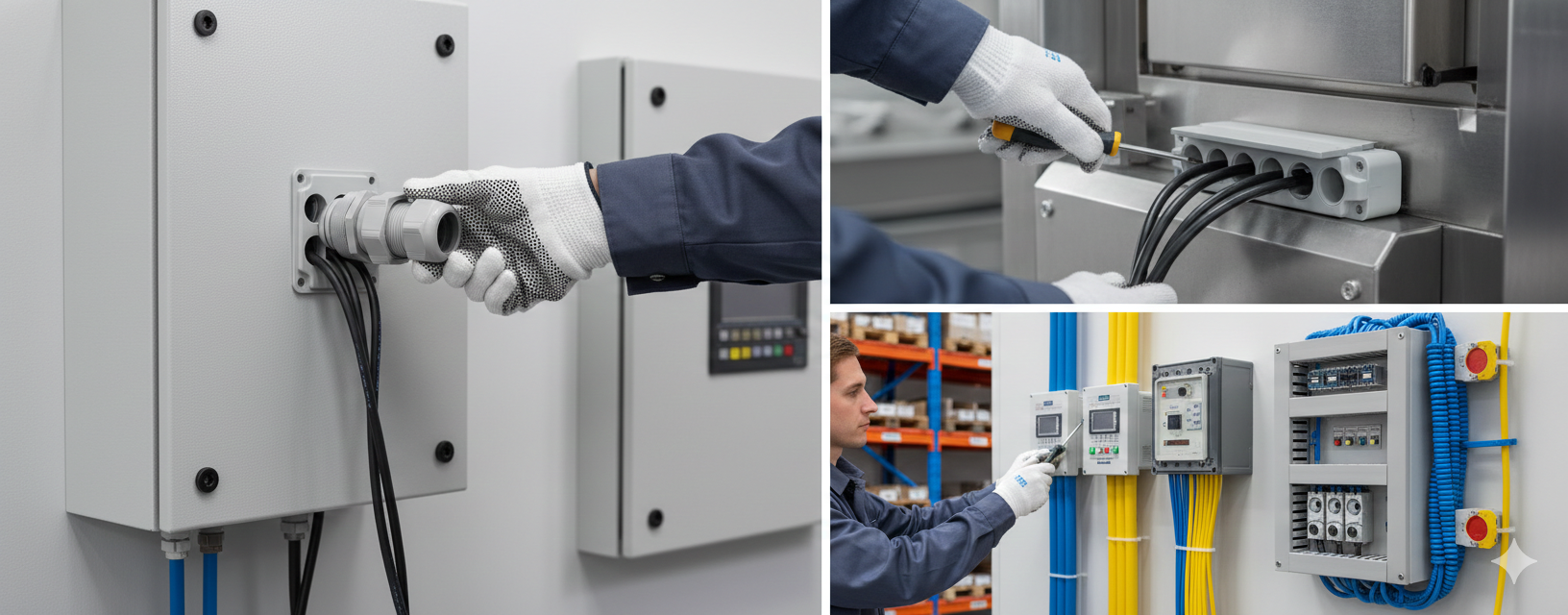
The cable management industry is undergoing a quiet but significant transformation. Driven by stricter environmental regulations, the rapid growth of electric vehicles, and pressure from global OEMs for greener supply chains, manufacturers are rethinking how they design, produce, and deliver cable ties, conduits, and mounting solutions.
Why Sustainability Now?
For decades, cable ties and fastening components were designed purely for performance — tensile strength, heat resistance, and chemical compatibility. Environmental impact was rarely part of the conversation. Today, that has changed.
European RoHS directives, India's Extended Producer Responsibility (EPR) norms, and IATF 16949 quality frameworks are all pushing component manufacturers to document material origins, reduce VOC emissions, and design for recyclability or safe disposal.
 Novoflex injection moulding facility producing Nylon 6.6 cable ties at its Noida plant.
Material Innovation: Beyond Nylon 6.6
Nylon 6.6 remains the workhorse material of the industry — and for good reason. It offers an excellent balance of tensile strength, temperature resistance, and UV stability. However, newer material grades are gaining traction:
- Halogen-free Nylon 6.6 — Meets the fire safety requirements of aerospace and defence applications without releasing toxic fumes on ignition.
- Bio-based Polyamide — Derived partially from castor oil instead of petrochemicals, reducing the carbon footprint by up to 50% per kilogram.
- Stainless Steel Cable Ties — Used in extreme temperature environments, these offer near-infinite life spans and are fully recyclable.
- Polypropylene (PP) Ties — Lighter and chemical-resistant, increasingly popular in plumbing and HVAC applications.
"The shift towards halogen-free and RoHS-compliant materials is no longer optional for Tier 1 automotive suppliers. It is a contract requirement." — Procurement Lead, Tier 1 EV Components Manufacturer
Smart Design: Reducing Waste at the Source
Beyond materials, product design itself is evolving. Traditional cable ties are installed, used once, and discarded. New design philosophies are challenging this:
Releasable cable ties allow technicians to reopen and re-route harnesses without cutting — reducing both material waste and labour time during maintenance. Low-profile mounting solutions integrate clip and tie functions, reducing total part count on a harness by up to 30%.
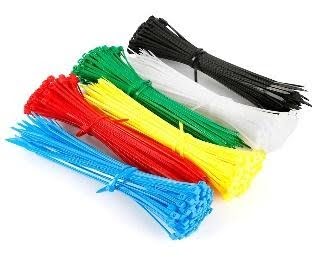 Optimised packaging reduces logistics carbon footprint and material waste across the supply chain.
The EV Opportunity
Electric vehicles present a unique opportunity for cable management suppliers. A single EV contains between 1,500 and 3,000 individual wire harness fasteners — roughly 2.5x the quantity in a comparable ICE vehicle. Higher voltage systems, thermal management requirements, and waterproof sealing all demand tighter component tolerances.
For Indian manufacturers like Novoflex, this represents a clear growth vector. Companies supplying Ather, Tata Motors, and Mahindra's EV lines are already specifying halogen-free, high-temperature Nylon 6.6 cable ties as a baseline requirement.
What This Means for Procurement
For sourcing and procurement teams, the evolving landscape means three things:
- Material declarations (RoHS, REACH) will become standard parts of RFQ documentation.
- Supplier capability to produce to multiple material grades — not just standard Nylon 6.6 — will differentiate shortlisted vendors.
- Total cost of ownership (TCO) models will start factoring in disposal and recyclability costs, not just unit price.